
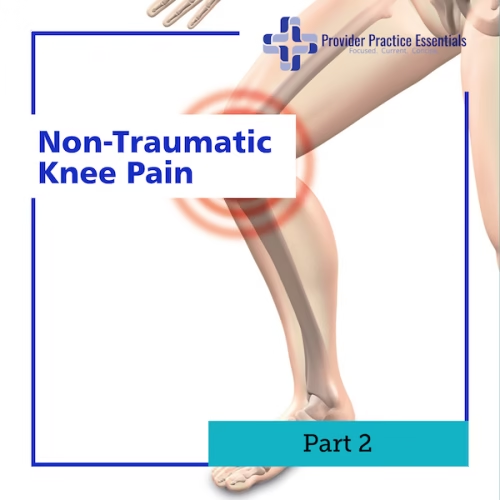
In the previous blog post, “non-traumatic knee pain, part I,” I discussed two common knee overuse injuries, iliotibial band syndrome and patellofemoral pain syndrome. In this blog post we are going to look into another common cause of non-traumatic knee pain, pes anserine bursitis, and discuss the infamous osteoarthritis.
Medical Tips
Chinese Novel Coronavirus Outbreak 2020: Quick Facts for Practitioners
What You Should Know About the Chinese Coronavirus
Near the end of 2019, a new (novel) coronavirus was identified as the cause of a localized group of pneumonias in the Chinese city of Wuhan. This new coronavirus has been designated 2019-nCoV, and it seems to be spreading globally with laboratory confirmed cases now being reported in other cities in Asia, as well as Australia, France, Germany, the US, and Canada.
GERD Management and Patient Education
The reason for this blog post is to bring awareness to a common scenario we see on a daily basis, long term proton pump inhibitor use. I see multiple new patients come in the office who list either Prilosec or Nexium as a daily medication. When I go over their medications and ask about these PPI’s the patient typically tells me they have been taking them for “awhile” and buy them over the counter so they won’t get heartburn. When I ask them how long “awhile” is, I generally hear anywhere from six months to a few years.
Night Shift Survival Guide
Healthcare workers know that their job never ends. Patients don’t stop coming to the hospital because it is a weekend, holiday or late at night. Therefore, we provide 24-hour coverage and support in order to take care of our patients – because that is what we do! We are super-humans who save lives! But at what cost? At some point in your career you have likely had to take on night shift and that means that you have to fight your own circadian rhythm in order to stay awake! How messed up is that?!? This is my personal survival guide (with help from my nurses) for surviving the vampire shifts! I will start this list of with more serious topics to take note of. Then, in true night shift fashion, we will take a 90 degree turn and jump off the deep end with some fun suggestions from those who have made a few life mistakes previously!
Decoding MIPS in Emergency Medicine – Radiology Edition
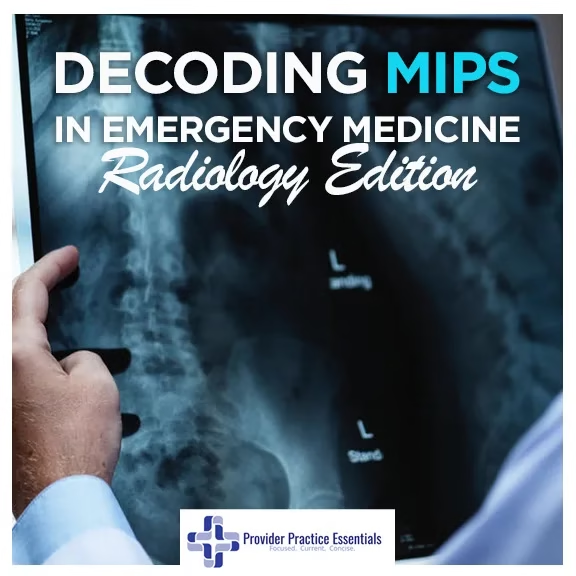
In our last edition, we discussed some ways of altering practice models or properly documenting patient care so that we stay within the current MIPS guidelines while continuing to provide the highest quality care. In this edition, we will discuss some of the MIPS guidelines as they pertain to Radiographic studies that are commonly ordered in ER/Urgent Care settings. As always, appropriate documentation as to why, or why not, a test was ordered is crucial not only for MIPS, but from a legal standpoint as well. So, let’s get into it!
Graduated, passed boards, got a job… now what?

“Don’t Hurt Anyone”
My first job as a nurse practitioner was ideal. I knew all the physicians. I knew all the nurses. I knew all the administrators. Yet, I was scared beyond belief. First and for most I did not want to hurt my patients. Second, I wanted the staff that I worked with to accept me as a competent nurse practitioner. I remember clearly two conversations from those first few days; “John, don’t hurt anyone” and two, “John, one of the most important things is know what you don’t know”.


