The purpose of this article is to review the ARDSnet protocol for management of ARDS with concurrent COVID-19 infection.
As of April 18th, 2020, the current confirmed positive cases of COVID-19 is 739,998 with 39,928 deaths (Google News, 2020).

 Bunnany Pekar, PhD, CRNA, AGACNP
Do you know the four types of shock and how to manage shock patients based on they type of shock they are in? If shock patients are not routine in your practice, this review will re-familiarize you with them and the therapeutic interventions recommended for treatment. What are the four types of shock? Shock is … Read more
It’s important for providers of all levels to know how to set ventilator settings and other ventilator management basics. Scenerio: You are covering a very busy ER and your patient in respiratory failure you was just intubated. The Registered Respiratory Therapist (RRT) consults you on what ventilator settings you want the patient to be placed … Read more
The purpose of this article is to review the ARDSnet protocol for management of ARDS with concurrent COVID-19 infection.
As of April 18th, 2020, the current confirmed positive cases of COVID-19 is 739,998 with 39,928 deaths (Google News, 2020).
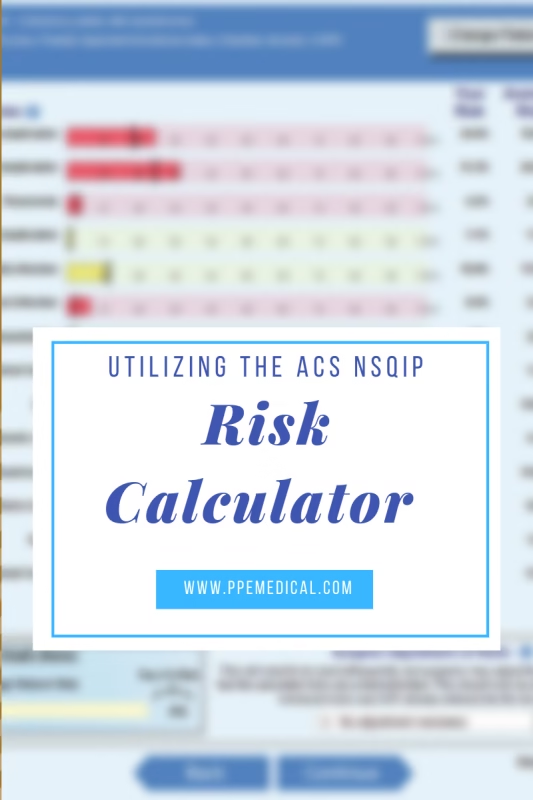
When a patient is planning to undergo an operation, it is important that she/he has full understanding of what the proposed surgical intervention is along with the risk of surgery. This is especially critical if the patient has a lot of comorbidities that may put him or her at higher risks of postoperative complications.
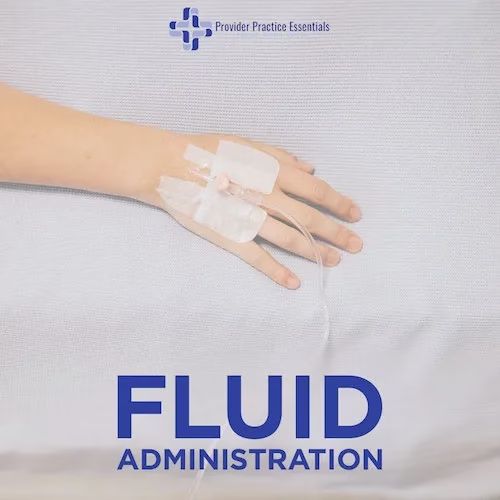
“Poison is in everything, and no thing is without poison. The dosage makes it either a poison or a remedy.” -Paracelsus, date unknown
For patients in septic shock or those that are dehydrated, administration of fluid is top priority to restore adequate intravascular volume, increasing cardiac output, augment oxygen delivery, and improving tissue oxygenation.
“This is it!”
This was my thought as I am aboard the plane from Phnom Penh, Cambodia on my way back home to Dallas, Texas. I had just spent 2 weeks in Cambodia – my first time after having been lucky to survive the Khmer Rouge. I was both exhausted and emotionally charged after a week of providing anesthesia on the medical mission trip and another travelling through Cambodia.


