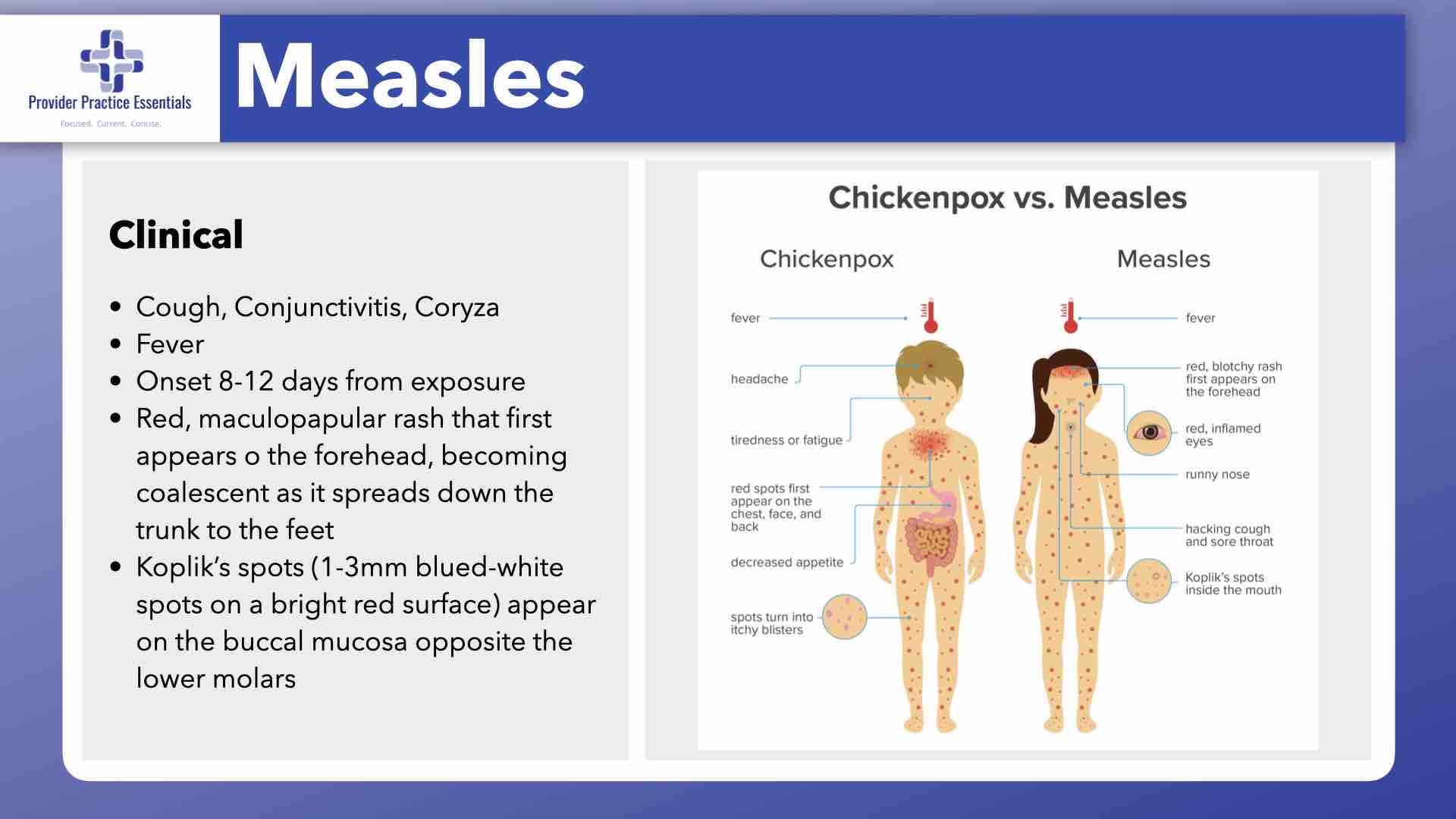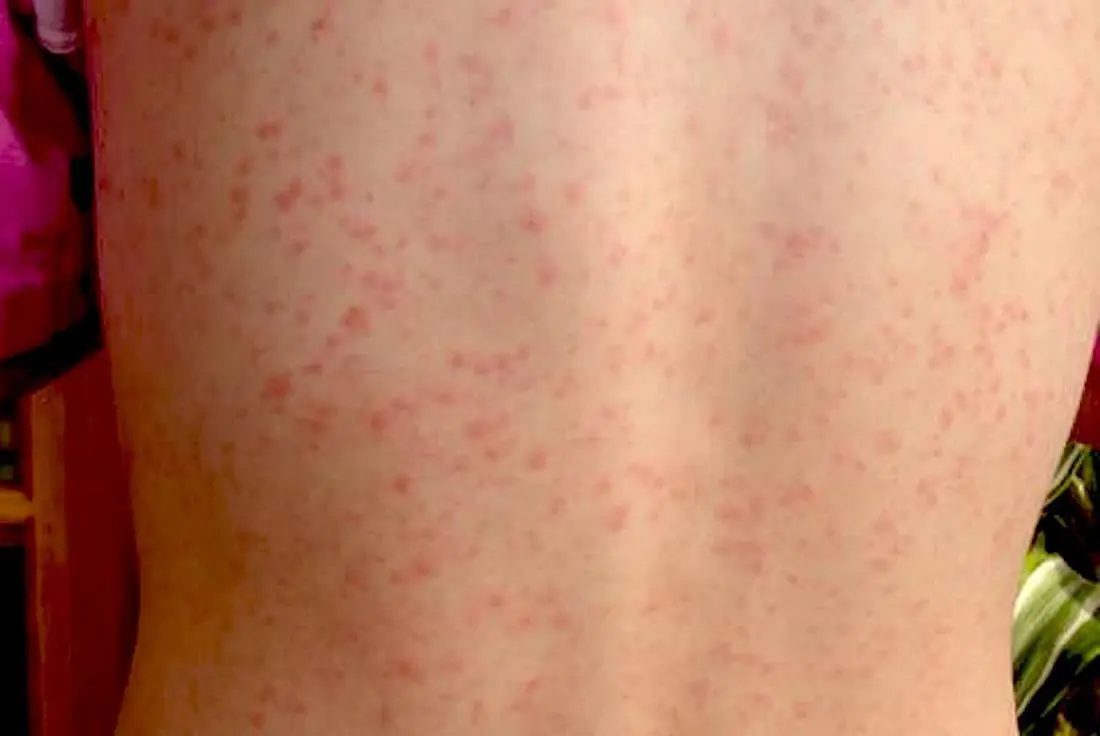
Pediatric rashes are a common complaint, and knowing the difference between them can save time, stress, and agony. Here are a series of resources to help you differentiate between the rashes most commonly seen.
| DISEASE | SEASON | PROGRESSION | MORPHOLOGY | DISTRIBUTION | ASSOCIATED FINDINGS | TREATMENT |
|---|---|---|---|---|---|---|
Measles/Rubeolaparamyxovirus
|
Winter to Spring |
Incubation: 1-2 weeks Communicability: Rash appears 3 days after symptoms |
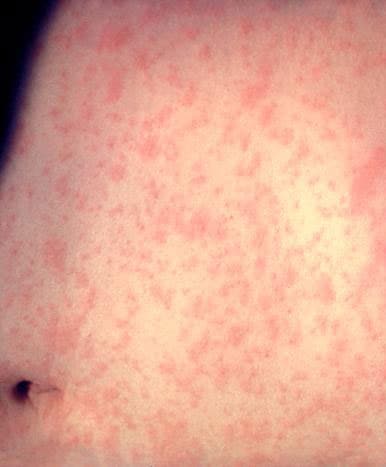
Erythematous, confluent, maculopapular
|
Begins at the hairline and spreads inferiorly |
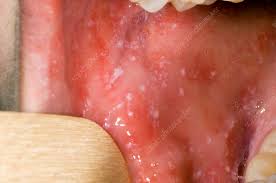
Koplik Spots
High Fever Cough, Coryza, and Conjunctivitis Forchheimer spots
|
-Infected: Supportive care -Unimmunized contacts: Measles vaccine within 72 hours of exposure or IgG within 6 days of exposure -Prevention: MMR vaccine |
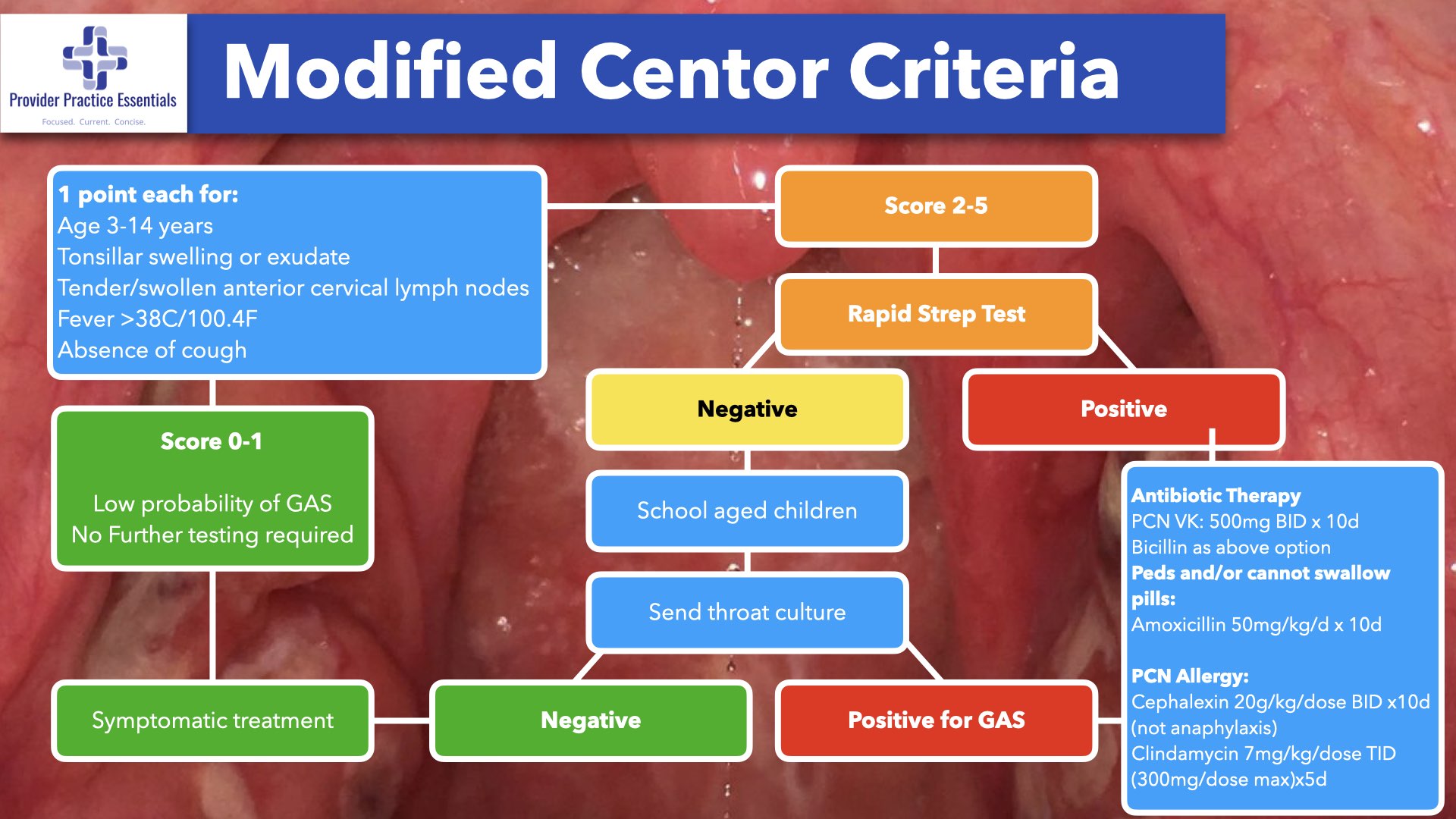
Scarlet FeverStreptococcus pyrogenes
|
Fall to Spring |
Incubation: 2-4 days Hypersensitivity reaction to Group A hemolytic Strep |
Generalized erythema with a sandpaper texture
|
Begins on the face and upper part of the trunk and spreads inferiorly |
-Pastia lines
|
Throat Swab, oral Penicillin V, Azithromycin if allergic Can return to school 24 hours after antibiotic started |
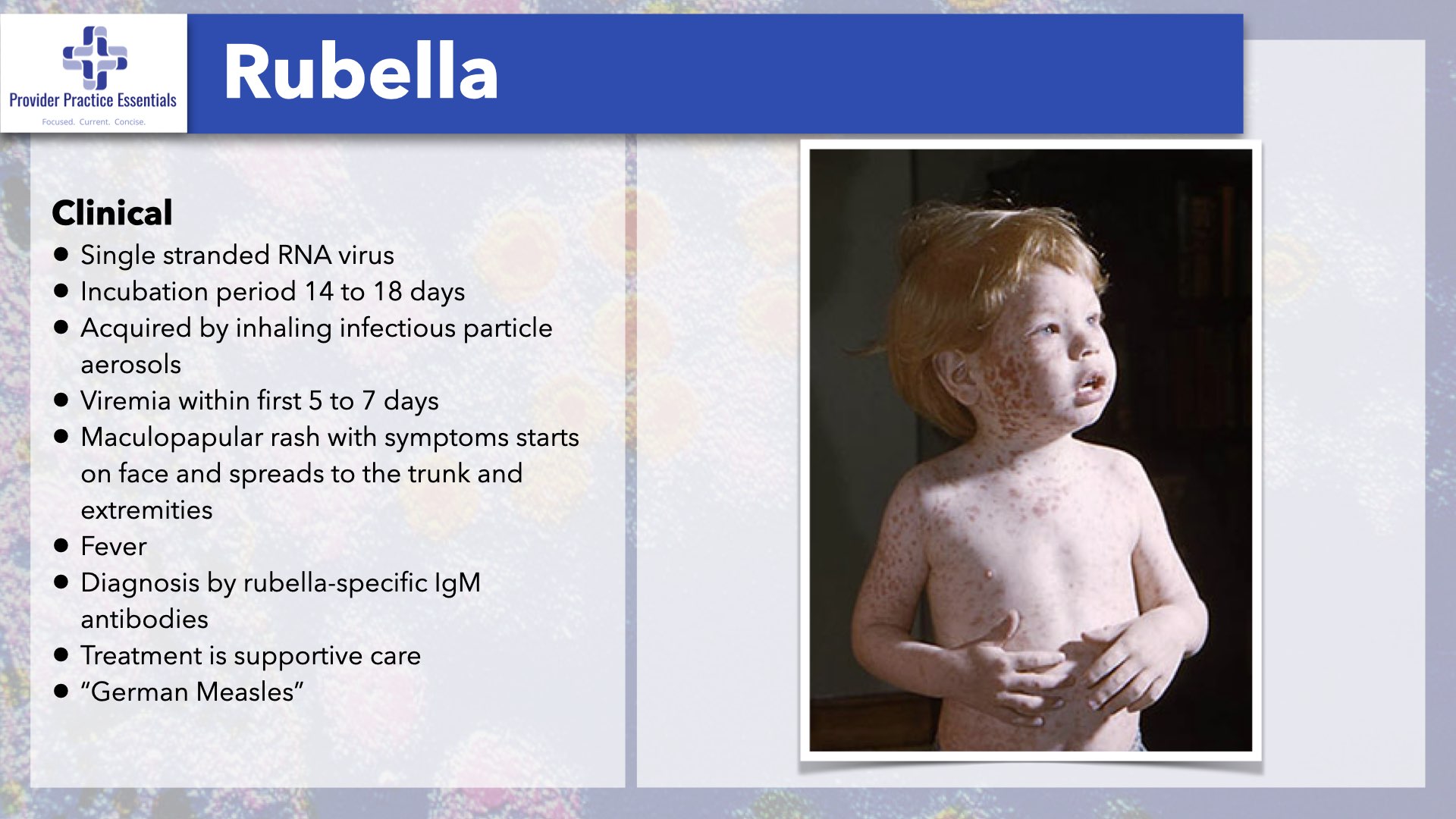
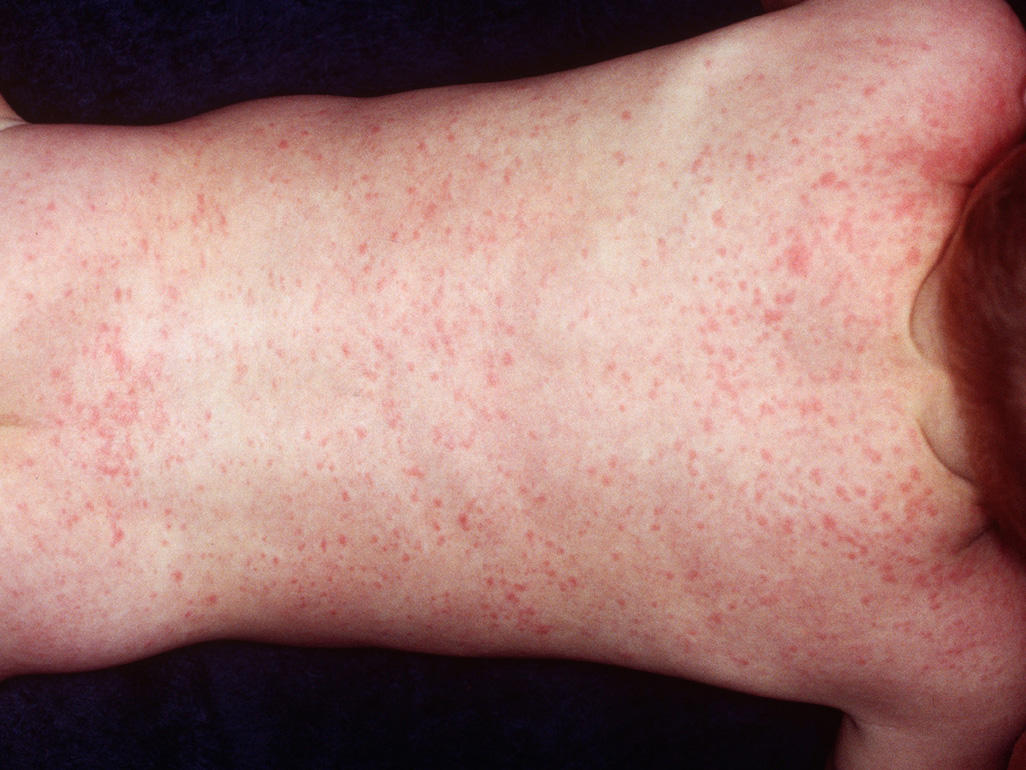
RubellaRubivirus
|
Late Winter and Early Spring |
Incubation: 2-3 weeks Communicability: Rash appears 1-5 days after symptoms |
Rose-pink, maculopapular 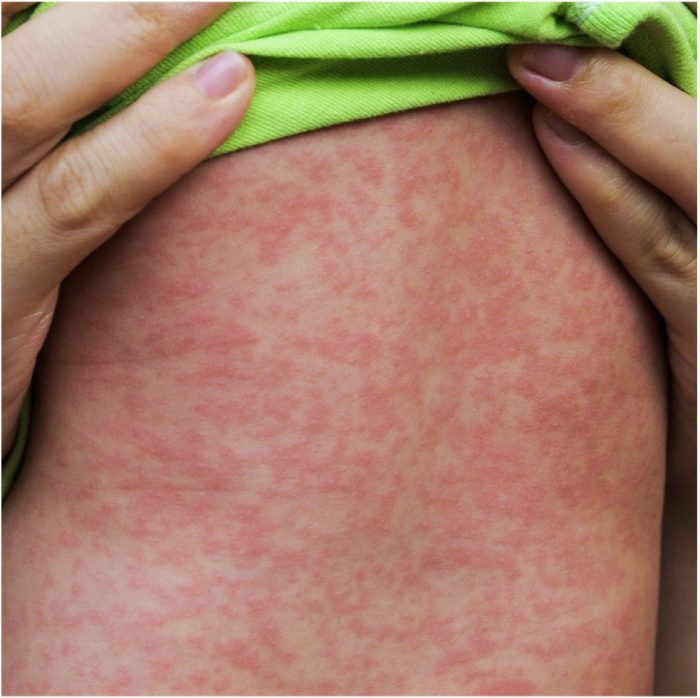 |
Spreads inferiorly | -Lymphadenopathy -Arthralgias -Forcheimer Spots |
Infected: Supportive care Prevention: MMR vaccine |
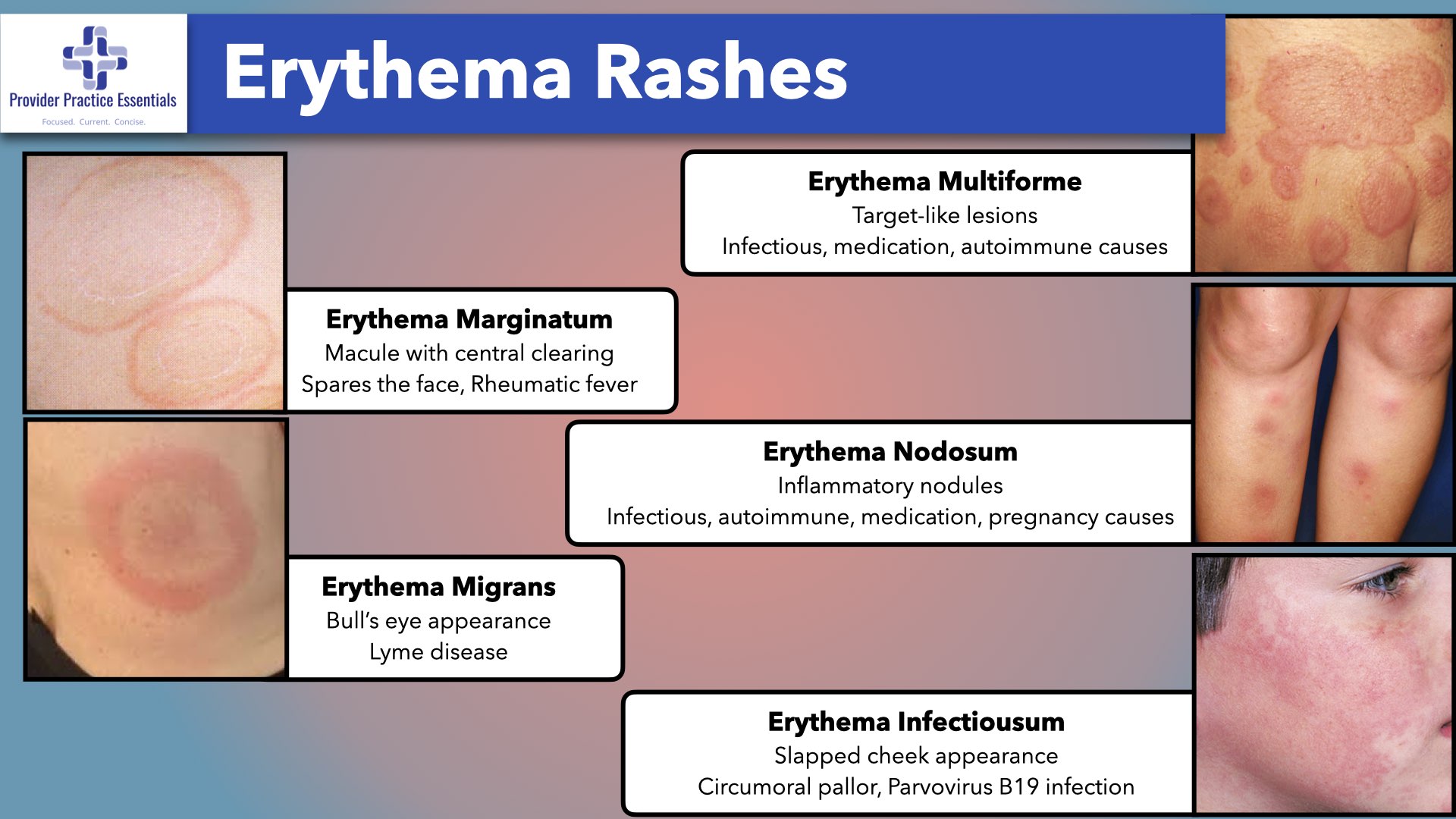
Erythema InfectiousumParvovirus B19
|
Winter and Spring |
“Slapped cheek” appearance, lacy reticular rash 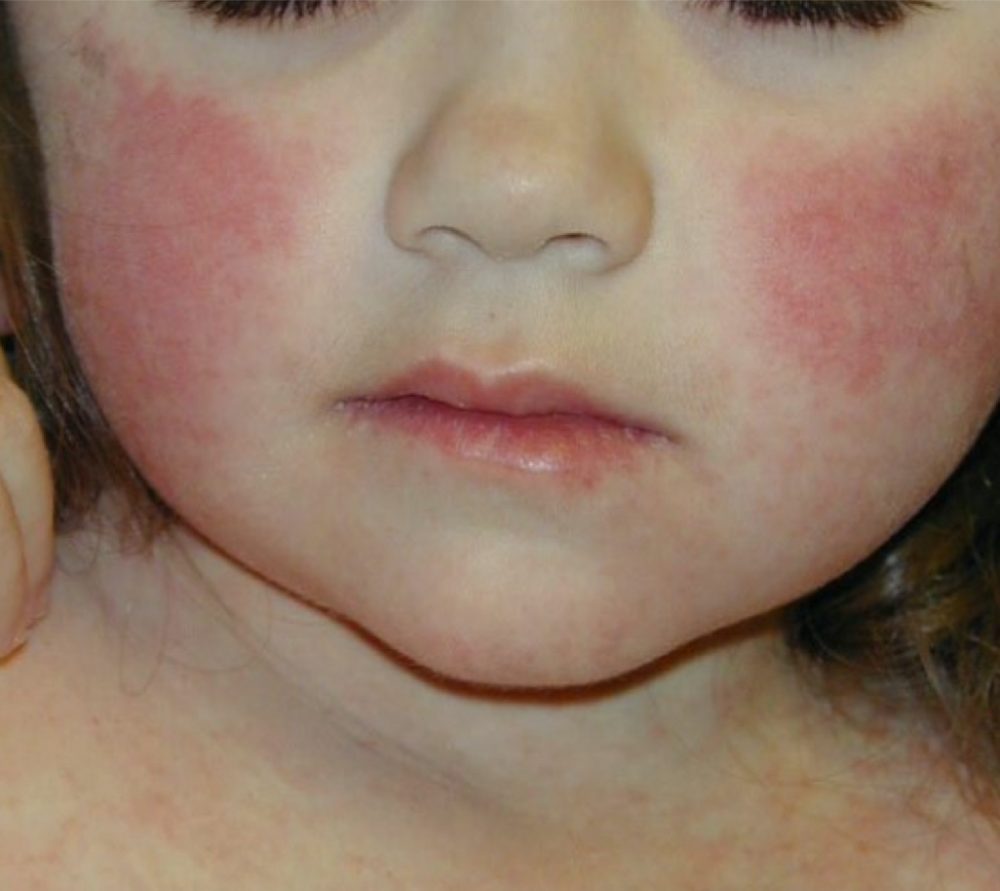 |
-Erythematous cheeks -Reticular Extremities |
-Rash waxes and wanes over weeks -Arthritis -Aplastic Crisis |
||
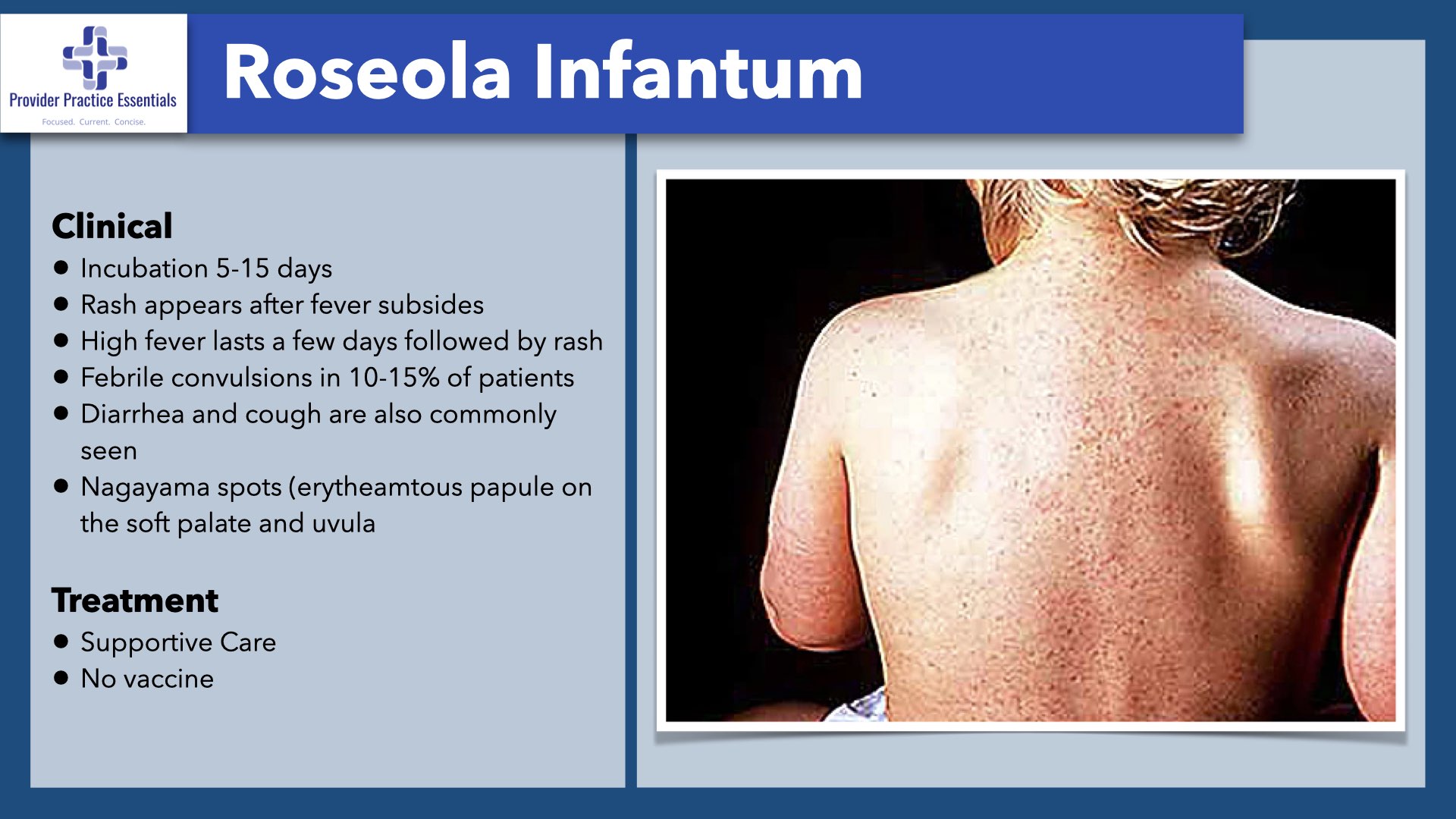
Roseolahuman herpesvirus 6 and 7
|
Spring |
Incubation: 5-15 days Communicability: Rash appears once fever subsides |
Rose-pink, maculopapular
|
Neck and trunk | -Lymphadenopathy -Febrile seizures -Aplastic Crisis |
Infected: Supportive care Prevention: No known vaccine |
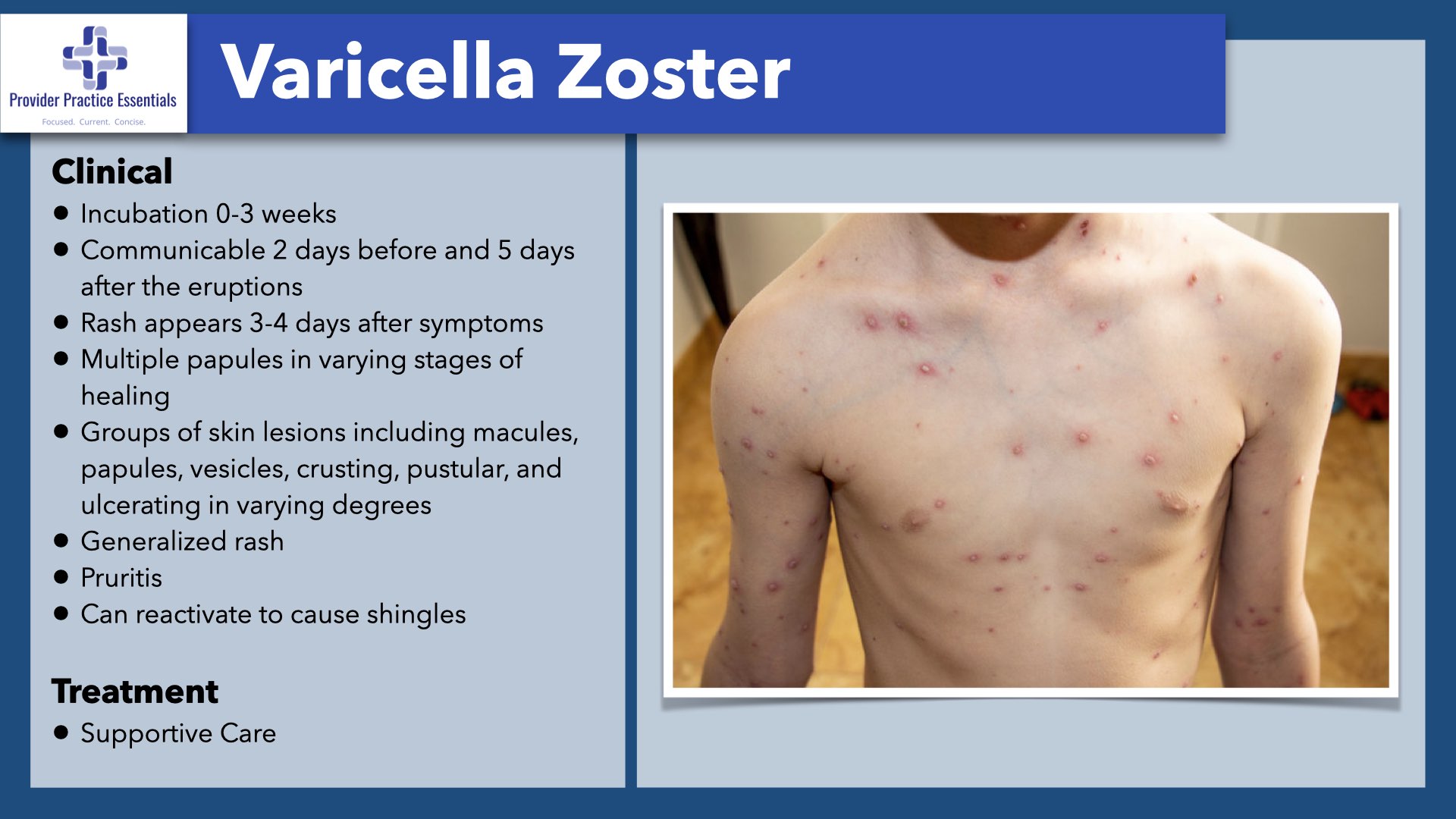
Varicellaherpes zoster virus
|
Late Winter and Early Spring |
Incubation: 0-3 weeks Communicability: Rash appears 3-4 days after symptoms |
Vesicles on an erythematous base, crusts, various stages of healing 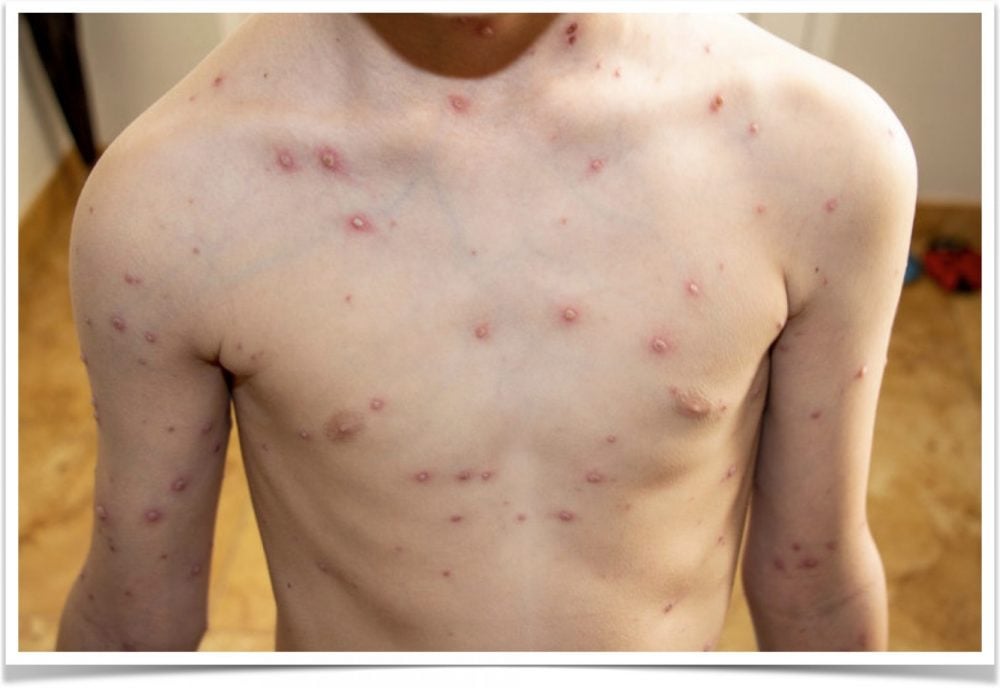 |
Begins on the face and trunk and spreads centripetally | -Pruritis -Varicella-Zoster |
Treatment: Supportive Care Prevention: Varicella vaccine |
Hand-foot-and-mouth diseaseCoxsackie A virus
|
Late Summer or early Fall | Elliptical vesicles on an erythematous base Oral vesicles Erosions |
Mouth, hands and feet | Vesicles on the hands and feet and in the mouth | ||
Herpes simplex
|
Variable | -Grouped vesicles on an erythematous base (e.g. anterior oral cavity – buccal mucosa, tongue, lips, around mouth) -Herpetic whitlow, painful fingers with vesicles -Genital herpes: HSV2, shaft of penis, vagina, vulva, anus -Keratitis |
Infected: Topical or Oral Acyclovir |